Advanced Filtration for Healthier Living
Keeps your air cleaner by removing more pollen, household dust, and lint than leading brands while helping reduce your exposure to airborne pollutants linked to serious health risks.
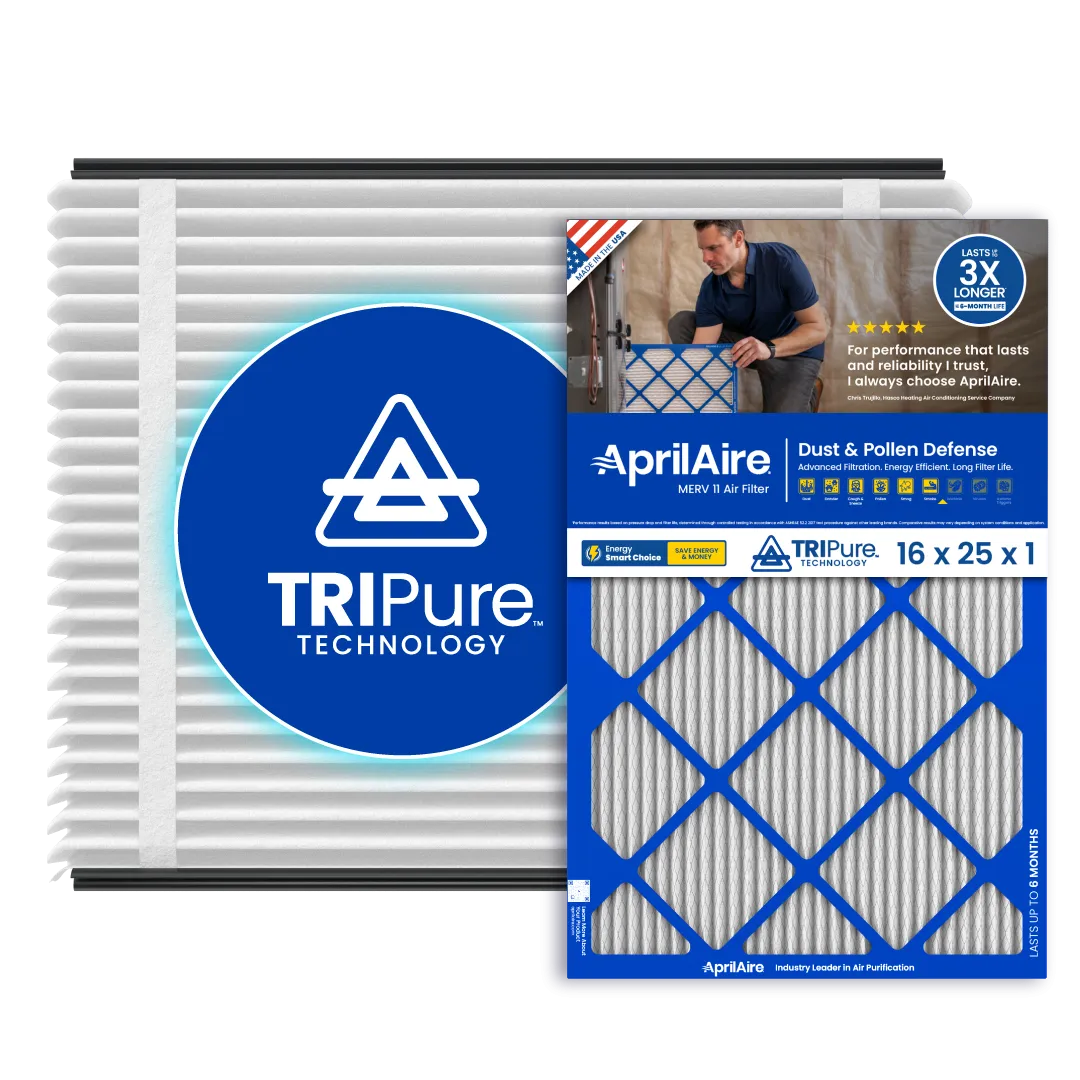
Experience cleaner, healthier air throughout your home with AprilAire premium whole-home filtration. Featuring TriPure™ Technology, these filters help reduce airborne contaminants, improve HVAC efficiency with up to 30% lower airflow resistance*, and provide long-lasting performance. 3″ filters are designed for a perfect fit for AprilAire high-efficiency, whole-house air purifiers; 1″ filters are designed for HVAC furnace or air handler filter slots.
Keeps your air cleaner by removing more pollen, household dust, and lint than leading brands while helping reduce your exposure to airborne pollutants linked to serious health risks.
Designed for less resistance and more energy efficiency, delivering up to 30% lower airflow resistance than leading brands* for improved HVAC system performance.
One filter lasts up to 12 months (3″) and up to 6 months (1″), providing greater convenience and reducing the need for frequent filter changes.


Fill your home with Healthy Air for improved virus protection, greater health, increased productivity, and better sleep with the all-in-one AprilAire Healthy Air System®.
Air purification is one important piece of the system. Learn more about the additional components (sold separately) below.
What’s Included:


Revolutionary new 3″ filter featuring TriPure™ Technology paired with free, one-time upgrade rails to improve performance of your existing whole-house air purifier. Upgrade rails install tool-free and glide smoothly into place, making future filter changes faster and easier.
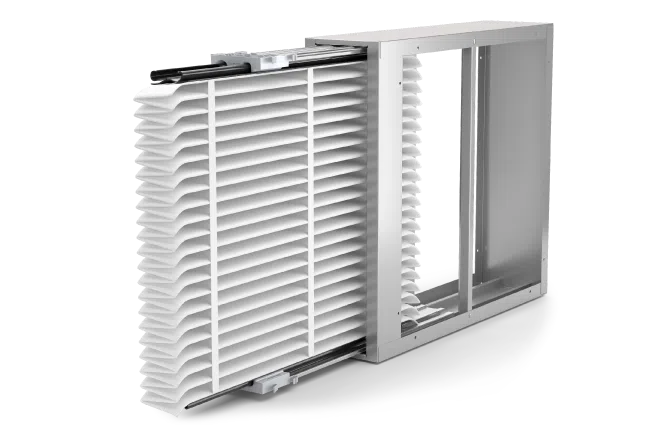
For healthier indoor air, improved HVAC system performance, and long-lasting value. Not sure which filter you need? Check out the 4″ Filter Upgrade Guide to 3″ Filter here.
The new AprilAire Healthy Air App is here! It’s intuitive, easy-to-use, and optimized for reliability.
Download Now:



*Performance results based on controlled testing in accordance with ASHRAE 52.2 2017 test procedure against other leading brands, showing up to 30% lower static pressure for 3” filters and up to 20% lower static pressure for 1” filters. Comparative results may vary depending on system conditions and application.